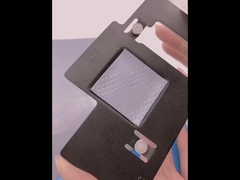
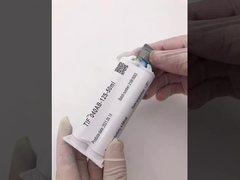
almohadilla térmica de llenado de huecos TIF300 Gris

导热硅胶片
January 30, 2021
Conexión De Categoría: cojín la termal del silicón
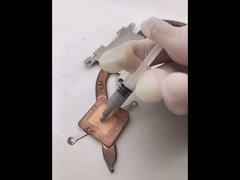
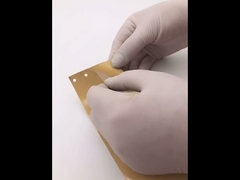
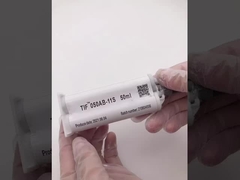
Breve: Únase a nosotros para una mirada de cerca a la almohadilla de relleno de huecos térmicos TIF300 Grey y vea cómo mejora la gestión térmica en la electrónica automotriz. Este video muestra sus características, aplicaciones y beneficios para profesionales B2B.
Características Relacionadas Del Producto:
  • Features good thermal conductivity of 1.5 W/mK for efficient heat transfer.
  • Naturally tacky surface requires no additional adhesive coating for easy application.
  • Soft and compressible design ensures low stress on sensitive electronic components.
  • Available in various thicknesses from 0.5mm to 5.0mm to fit different gap requirements.
  • Electrically isolating properties provide safety for automotive electronics applications.
  • Suitable for continuous use across a wide temperature range from -40°C to 160°C.
  • UL 94-V0 fire rating ensures high safety standards for automotive applications.
  • Available with optional pressure-sensitive adhesive on one or both sides as needed.
Las preguntas:
  • What is the thermal conductivity of the TIF300 Grey thermal gap pad?
    The TIF300 Grey thermal gap pad offers good thermal conductivity of 1.5 W/mK, providing efficient heat transfer for automotive electronics applications.
  • Does this thermal pad require additional adhesive for installation?
    No, the TIF300 Grey thermal gap pad features a naturally tacky surface that requires no additional adhesive coating, making installation straightforward and efficient.
  • What thickness options are available for this thermal gap filler?
    The TIF300 Grey thermal gap pad is available in various thicknesses ranging from 0.020-inch (0.5mm) to 0.200-inch (5.0mm), allowing for precise fitting in different automotive electronic applications.
  • What temperature range can this thermal gap pad withstand?
    This thermal gap pad is designed for continuous use across a wide temperature range from -40°C to 160°C, making it suitable for demanding automotive environments.